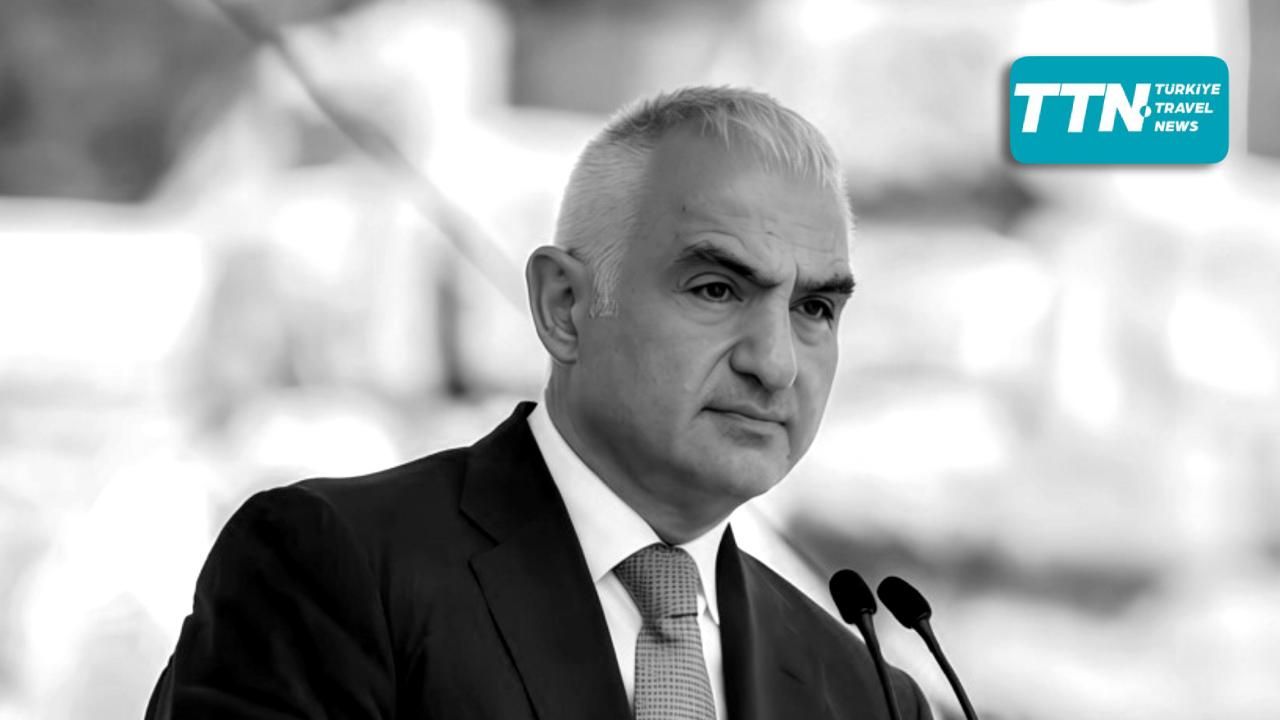
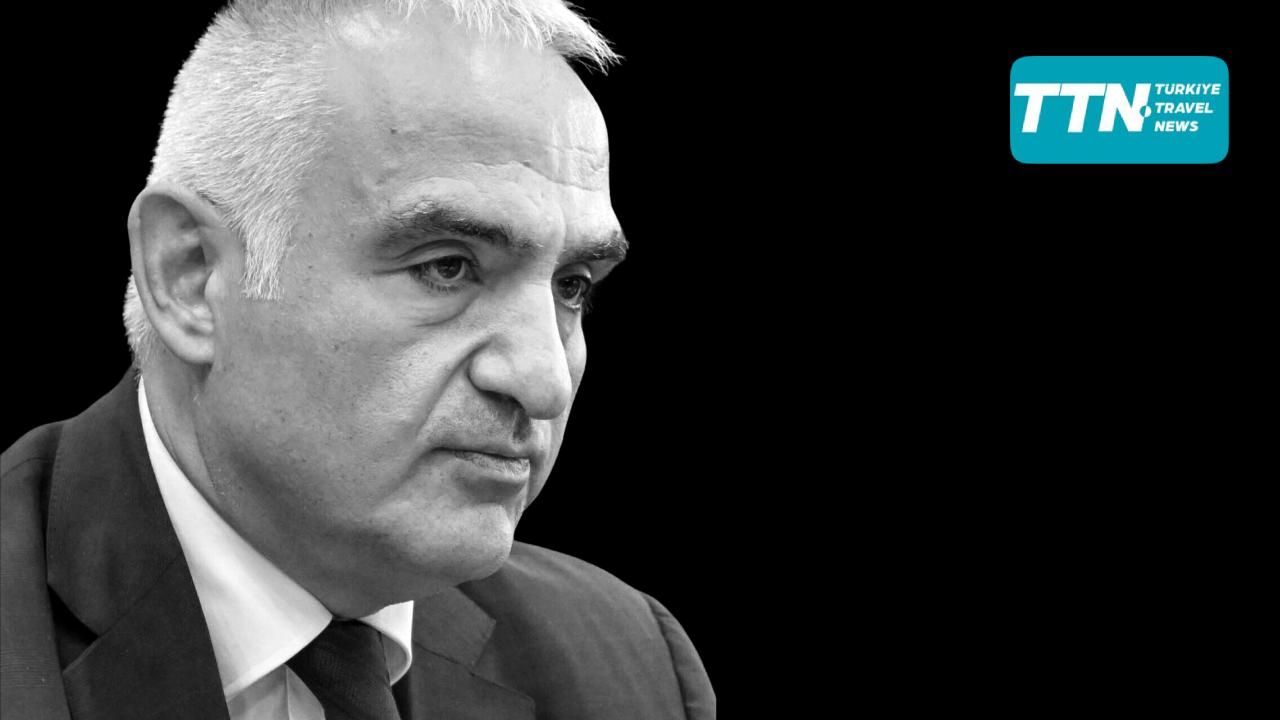
Turkish Tourism Minister Mehmet Nuri Ersoy has warned that rising aviation costs and an increase in last-minute bookings will be key factors shaping the 2027 tourism season. Speaking at WTM London, Ersoy said that higher oil prices could add an average of $100 to tickets for flights lasting three hours or more.
Mehmet Nuri Ersoy met journalists at Türkiye’s stand during WTM London, where he discussed the country’s tourism strategy, the UK market, aviation costs, international promotion, MICE tourism, gastronomy and efforts to expand into long-haul markets.
Providing details of Türkiye’s participation at the exhibition, Ersoy said the country was represented with a 909-square-metre main stand, a 255-square-metre destination area and a 50-square-metre sports tourism section, alongside 78 sub-exhibitors.
Higher airfares expected to affect 2027 travel planning
Ersoy described the UK as Türkiye’s third-largest source market after Russia and Germany and said the country expected the British market to maintain its strong performance.
Referring to the impact of regional conflicts on energy prices and transportation costs, Ersoy explained that annual fuel price hedging arrangements in the aviation industry had initially prevented the full impact of rising costs from being reflected in ticket prices.
However, he expects higher oil prices to have a more significant impact on airfares in 2027 as these arrangements come to an end.
According to Ersoy, flights lasting three hours or longer could face an additional average cost of approximately $100 per ticket.
Last-minute bookings to gain a larger share
Ersoy also highlighted changes in booking patterns, noting that early bookings could account for a smaller share of reservations while last-minute sales become increasingly important.
He said Türkiye was holding extensive discussions with tour operators in several countries and would adapt its promotional and sales strategy to these changing market conditions.
The country plans to maintain continuous promotional and sales campaigns throughout the year in cooperation with tour operators, airlines and travel platforms.
Türkiye records highest-ever quarterly tourism revenue
Assessing the country's tourism performance in the third quarter and the first nine months of the year, Ersoy recalled that the conflict that began at the end of February had negatively affected tourism during the second quarter.
At the time, the Ministry had expressed expectations that the most difficult period was over and that intensive promotional campaigns would support a recovery in the third quarter.
According to Ersoy, the latest figures confirmed this recovery.
Türkiye's tourism revenue reached $25.526 billion in the third quarter, representing a 5% increase compared with the same period of the previous year. Ersoy described this as the highest quarterly tourism revenue recorded by the country to date.
He also said the losses experienced during the second quarter had been offset.
For the first nine months of the year, tourism revenue increased by 2.4% to $51.278 billion, while Türkiye welcomed a total of 49.132 million visitors.
UK promotion focuses on city breaks and cultural tourism
Ersoy said the UK was among the countries receiving the most intensive tourism promotion by Türkiye.
Promotional activities include television advertising, digital platforms, social media campaigns and programmes bringing influencers and opinion leaders to Türkiye.
These efforts are complemented by direct sales-oriented campaigns conducted in cooperation with tour operators, airlines and travel portals.
The minister noted that British visitors travel to Türkiye not only during the summer season but also in the low season and winter months, including destinations traditionally associated with summer holidays.
He said this pattern made the UK market particularly important for extending tourism activity throughout the year.
Ersoy also highlighted the promotional efforts targeting Istanbul in recent years, noting a significant increase in the number of visitors arriving in the city from the UK.
TGA establishes a dedicated MICE unit
Ersoy announced that the Türkiye Tourism Promotion and Development Agency (TGA) was establishing a dedicated unit focusing on MICE tourism, covering meetings, incentives, conferences and exhibitions.
The initiative aims to expand Türkiye's role in hosting major international events, including large-scale corporate gatherings, in addition to intergovernmental conferences.
Ersoy identified the Lütfi Kırdar International Convention and Exhibition Centre and the venue designated for COP31 as important facilities in this strategy.
He said Lütfi Kırdar had been transferred to the Ministry of Culture and Tourism, while the process for transferring the COP31 venue to the Ministry was expected to be completed within a few months after the event.
With these facilities, Türkiye plans to submit bids to international companies and attract more major corporate events and global organisations.
Türkiye expands air connectivity to long-haul markets
Ersoy said Türkiye had focused on diversifying its source markets over the past eight years, highlighting the importance of reducing dependence on a limited number of markets.
He noted that market diversification increased the tourism industry's resilience to crises, while Türkiye continued to strengthen its position in established markets and prioritise long-haul destinations.
The minister highlighted ongoing efforts in the United States, Canada and China, particularly initiatives to increase air connectivity.
Regarding China, he said a decision to increase capacity from 21 to 49 had been followed by the introduction of additional flight opportunities from September. He expects this expansion to support further growth in the Chinese market.
Ersoy also underlined the close cooperation with Turkish Airlines, noting that deliveries of long-haul aircraft would strengthen Türkiye's access to distant markets.
He referred to planning for long-distance destinations such as New Zealand, adding that Türkiye aimed to expand its international air connectivity, particularly to long-haul markets.