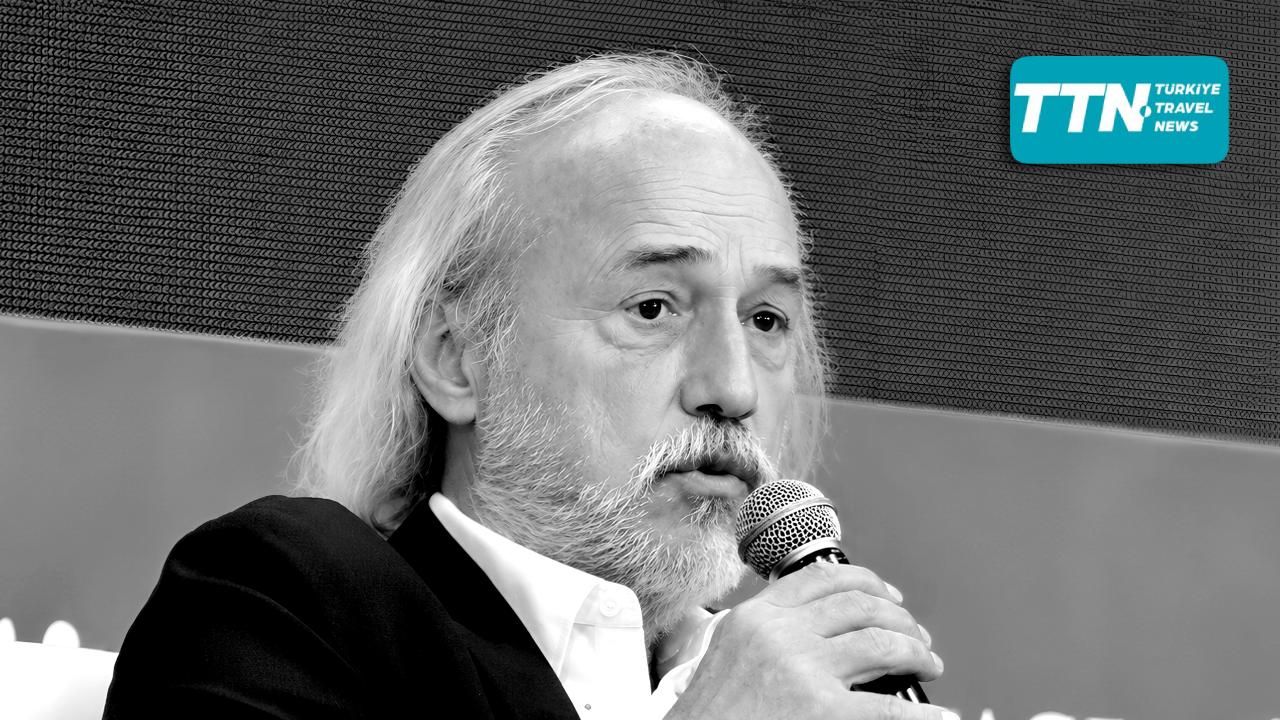
The UK tourism market, which experienced a significant contraction in 2026, is showing few positive signs for 2027. Rising operating costs, flight cancellations and capacity reductions have already put pressure on the market, and the latest assessment from Münci Karakaya, Chairman of the Board of MTS Globe, one of the leading incoming tourism companies serving Türkiye from the UK, points to further challenges.
Speaking to Savaş Daş, News Director of Turizm Ekonomi, Karakaya said the UK market was expected to contract further in 2027 for several reasons, with the company's forward sales figures already indicating a weaker performance.
UK market down 10% in 2026, 2027 sales lag by 20%
Karakaya said the company would close 2026 below the previous year's level, primarily due to developments in the UK market.
He explained that the UK had become MTS Globe's main source market and that approximately one-third of all British visitors travelling to Türkiye came through the company. This made MTS Globe's performance an important indicator of broader trends in the UK market, he said.
"We are approximately 10% behind last year in the British market, which represents a significant contraction. However, next year currently looks even more negative than this year. Compared with the corresponding period in previous years, we are running approximately 20% behind," Karakaya said.
Türkiye's high costs and exchange rate policies weigh on demand
According to Karakaya, the main reasons behind the contraction include Türkiye's high costs and exchange rate policies, alongside the economic situation in the UK.
He noted that British consumers were increasingly concerned about economic conditions at home, while Türkiye's rising prices had also affected its position in the market.
"Everyone is aware of developments in Türkiye. Our prices have reached a certain level, and I can say that the image of Türkiye as a cheap destination no longer exists. Whether you want to be a low-cost destination or not is a separate issue, but we cannot deny its impact," he said.
Karakaya also pointed to inflationary pressures on the Turkish tourism industry, noting that hoteliers had to adjust their prices in response to rising costs.
"Inflationary pressure is weighing on us, and our hotelier partners have to set their prices accordingly," he added.
Egypt, Croatia, Tunisia and Morocco increase competition
Karakaya identified the emergence and renewed growth of competing destinations as another factor affecting Türkiye's position in the British market.
"Egypt is making a major breakthrough. In addition, there are Croatia and other emerging destinations along the Adriatic coast. Tunisia and Morocco have also returned to the market," he said.
He emphasised that competition from these destinations was an important factor in the changing market landscape.
Karakaya said it was still too early to assess developments in several other source markets, including the Balkans and Russia. He also noted that MTS Globe's market share in Germany was not sufficiently representative of broader market trends to allow him to comment on the German market.

"Outside these markets, it is still too early to make an assessment. But, as I said, the situation in the UK is not particularly bright," he said.
Additional £15,000 fuel cost per flight puts pressure on airfares
Rising aviation costs are another major concern for the 2027 season, according to Karakaya. He warned that higher aircraft fuel prices and the additional costs being passed on by airlines could make flight tickets increasingly unaffordable for consumers.
Karakaya estimated that an additional fuel cost of £15,000 was currently being added to the operating cost of a flight to Türkiye.
"If you add an extra £15,000 in fuel costs to the current cost of a flight to Türkiye and divide this amount among 167 to 180 passengers, you can calculate the additional cost per person," he said.
He questioned whether passengers would be willing or able to absorb these increases, noting that current figures indicated that consumers were either unable or unwilling to pay the additional costs.
Karakaya suggested that the situation could continue until the last minute, after which market players might need to reconsider and renegotiate their pricing.