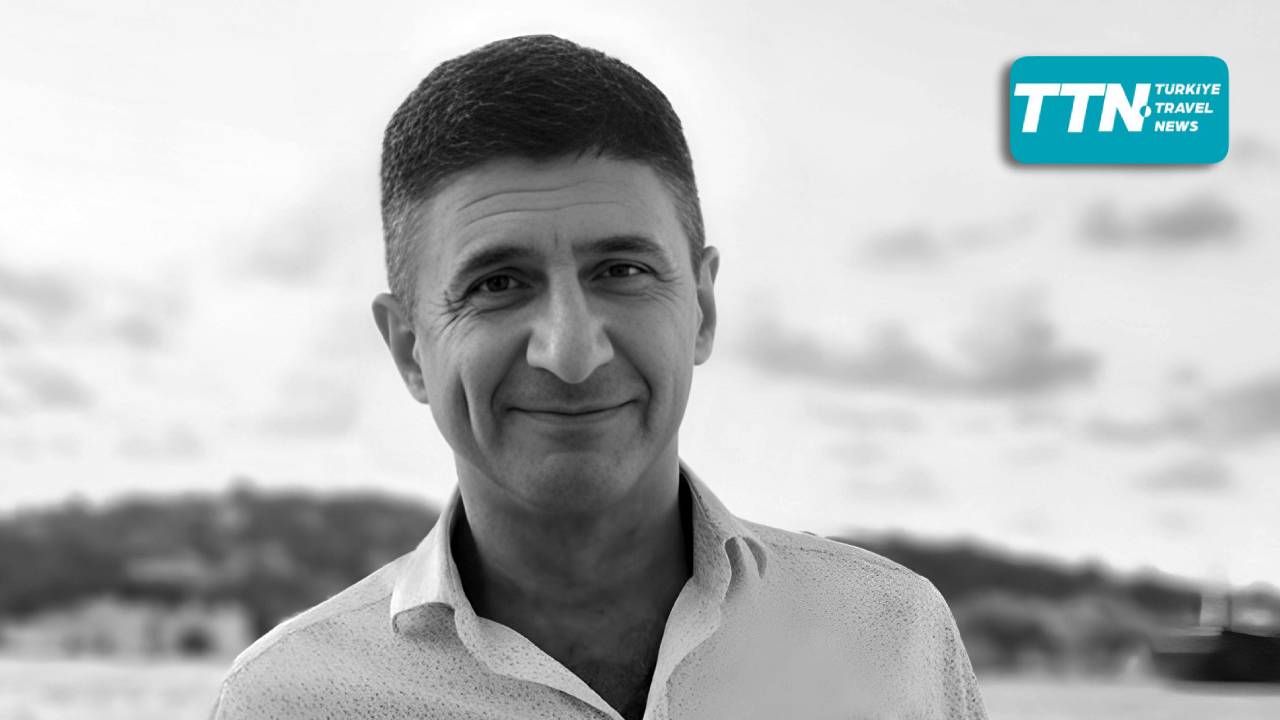
As Türkiye closes the 2025 season in the Russian tourism market at roughly the same level as 2024, attention has turned to how the market will perform in 2026. Speaking to Savaş Daş, Editor-in-Chief of Turizm Ekonomi, sister B2B travel portal of Türkiye Travel News, İsmail Bölükbaşı evaluated the Russian market’s 2025 performance, the key factors reshaping market dynamics, competing destinations, and expectations for 2026. He emphasized that one of the most decisive factors shaping demand in Russia remains the exchange rate.
2025: Stable volumes, satisfactory revenues
Bölükbaşı noted that while the number of travelers remained largely unchanged in 2025, revenues were satisfactory. He said Intourist achieved its targets in outbound operations, but due to certain conjunctural factors—such as drone attacks and frequent airport closures—the company was unable to reach its desired targets in the domestic Russian market.
Exchange rate impact and early booking dynamics
Stating that 2025 was productive for almost all players in Russia’s outbound market, Bölükbaşı shared the following outlook for 2026:
“2026 looks better than 2025. This is not only about Türkiye; the same applies to all destinations receiving tourists from Russia. Exchange rate movements play a very important role here. At this time last year, the dollar was above 100 rubles. Today, it is well below that level. With the dollar at 77 rubles and the euro at 92 rubles today—compared to 100 and 114 rubles respectively last year—this naturally triggers early bookings.”
Pricing policies and competing destinations
Bölükbaşı noted that hotels in Türkiye did not implement major price increases in the Russian market in 2025, adding that a similar trend was observed in Russia’s domestic market. “Some hotels made no price increases at all, others raised prices by around 5 percent, and some even reduced prices. Russians have many options for holidays outside Europe. Destinations such as Thailand, Vietnam, and India offer very affordable vacations. Traveling more cheaply and visiting a new destination is very appealing to people,” he said.
Sanctions, growth rates, and Türkiye’s position
Bölükbaşı stated that even without a resolution to the Russia–Ukraine conflict, 2026 would not be worse than 2025. “Sanctions against Russia have essentially reached their limit. There is little more that can be done economically. Over the past four years, it has become clear that sanctions did not achieve their intended effect and that the Russian economy has proven resilient,” he said.
Responding to the question of whether Türkiye risks losing ground in the Russian market while destinations such as Egypt, Thailand, the UAE, and Vietnam post high double-digit growth rates and Türkiye grows by only around 3.5 percent, Bölükbaşı said:
“2024 was a relatively difficult year for tour operators in Russia. As a result, planning for Türkiye in 2025 was done more cautiously, and some aircraft were shifted to other markets. Even so, the number of Russians traveling to other countries is negligible compared to those traveling to Türkiye. There is a huge gap between the number of Russians visiting Egypt, Thailand, Vietnam, or Dubai and those visiting Türkiye. Demand for Türkiye could have been increased in 2025, but that would have led to losses for tour operators. We experienced this in 2024. There was a tendency to ‘push for growth,’ but financial outcomes forced a rethink. Moreover, there was limited aircraft availability. Turkish Airlines offered fewer seats to the Russian market than the previous year, which I believe was ultimately beneficial for the sector. More aircraft might have increased passenger numbers by 2 percent, but operators would have struggled financially.”
“Other markets are also very attractive for Russians”
Bölükbaşı emphasized that while Türkiye is close, attractive, and offers packages for every budget, this does not mean Russians will always choose Türkiye. “Other markets are also extremely attractive. Vietnam, which had been closed for many years, reopened this year and is performing very well. It is not equivalent to Türkiye, but it offers a different, exotic tourism experience. Thailand is also seeing growth. Dubai is a year-round destination, but I do not think it is growing, as overly ambitious flight planning in previous years did not deliver expected results.
Visa-free travel between China and Russia is also significant. There are more than 2 million trips from Russia to China, although a substantial portion of these figures comes from day trips across eastern border crossings,” he added.
Exchange rates, costs, and early booking risks
Addressing whether cost-driven price increases in Türkiye are accepted in the Russian market, Bölükbaşı said:
“The prices Türkiye asks in return for the service it provides are accepted in the market, and we receive very few complaints. For Russian consumers, however, the key issue is what they can buy with their rubles. One of the core issues is the dollar exchange rate. A holiday priced at €1,000 may remain €1,000 next year, but if the exchange rate rises from 70 rubles to 100 rubles, the equation changes entirely. So the real issue is not Türkiye’s prices, but the purchasing power of the ruble. This is also why early booking sales are performing well right now.”
“Tour operators offer price guarantees to customers”
Bölükbaşı explained that Russian tour operators have taken precautions against the risk of in-season prices falling below early booking levels. “If prices during the season drop below the early booking price we sold, we refund the difference to the customer. This has a positive impact on early booking sales. Moreover, very sharp price discounts during the season are quite rare,” he said.
2026 outlook: A continuation of 2025
Reiterating that 2026 is likely to be a continuation of 2025 in the Russian market, Bölükbaşı concluded:
“Türkiye has genuinely become a more expensive destination. As a result, tourists tend to stay within their hotels. I hope the economy improves somewhat; that would allow people in Türkiye to breathe more easily, visitors to be more satisfied, and ultimately all of us to benefit.”