
Türkiye welcomed a total of 9.2 million visitors in the first quarter of 2026, marking a 4.25% year-on-year increase, according to official data. Of this total, 6.83 million were foreign visitors, while 2.38 million were Turkish citizens residing abroad.
Foreign arrivals rose by 2.21%, while visits from Turkish citizens living abroad increased significantly by 10.58%, highlighting stronger diaspora travel demand.
Europe leads growth in key source markets
European OECD countries continued to drive growth in Türkiye’s inbound tourism.
Germany, the country’s second-largest source market, saw a sharp 18% increase to 677,000 visitors. Austria rose 13.5% to 65,000, the Netherlands increased 3.43% to 147,000, the United Kingdom grew 3.43% to 314,000, and Poland increased 6.61% to 83,000.
Overall, arrivals from European OECD countries rose 8.86% to 2.09 million visitors in the first quarter.
Russia and CIS markets maintain steady growth
The Russia and CIS region remained a strong contributor to Türkiye’s tourism performance.
Russia recorded an 8.18% increase to 650,000 visitors. Georgia followed with 288,000 (+8.81%), Azerbaijan with 188,000 (+2.86%), Ukraine with 133,000 (+5.52%), and Kazakhstan with 98,000 (+22.45%).
Total arrivals from Russia and CIS countries increased 7.68% to 1.65 million visitors.

Mixed performance in emerging markets
Emerging markets showed divergent trends in the first quarter.
Iran declined sharply by 28% to 527,000 visitors, while China surged 43% to 111,000. India fell 23.26% to 39,000.
The United States increased 10% to 197,000 visitors, Canada rose 14.83% to 46,000, Australia grew 3.37% to 20,000, and South Korea edged up 0.5% to 47,000. Japan, however, declined 3.41% to 34,000.
Seasonal effects and market outlook
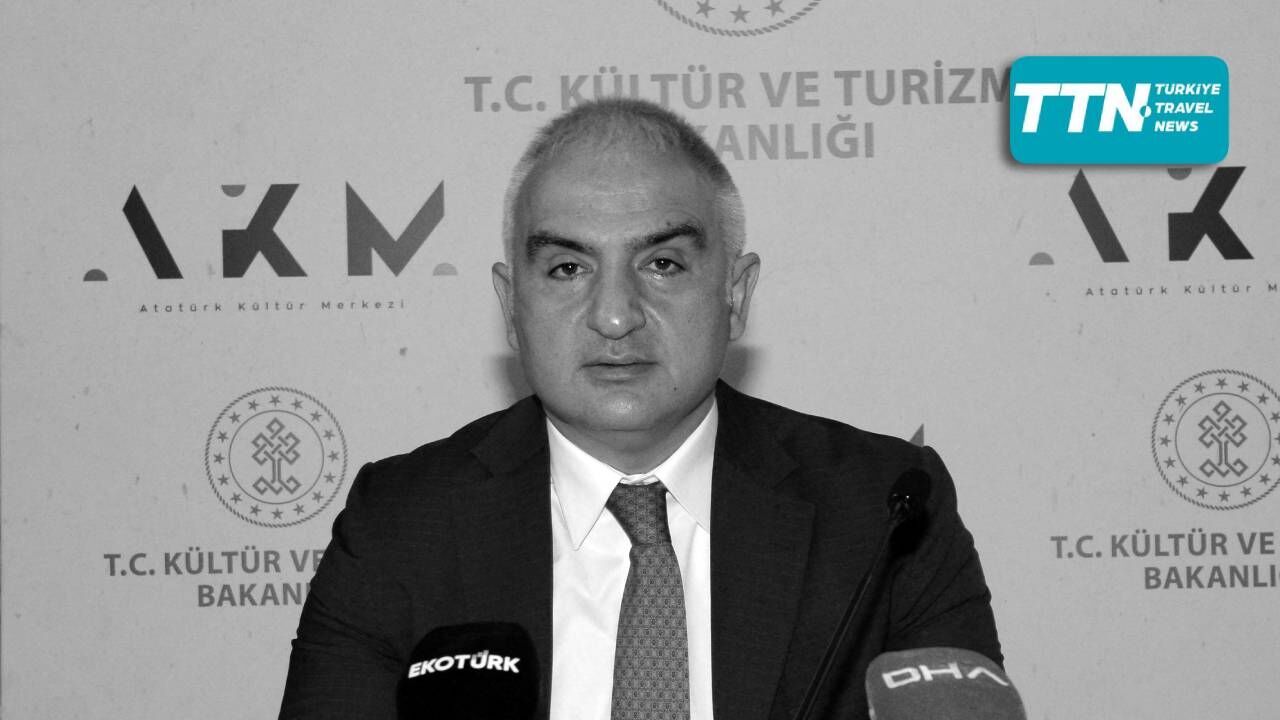
Minister of Culture and Tourism Mehmet Nuri Ersoy said Türkiye entered 2026 with growth despite global challenges, noting strong January performance with 3.13 million visitors (+6.1%), followed by a February decline attributed to Ramadan timing effects.
Ersoy emphasized that Ramadan-related shifts typically reduce demand by 20–25%, making the February decline a technical seasonal effect rather than structural weakness.
He also highlighted that Türkiye is evolving beyond a destination into a hub of trust, accessibility, experience and continuity, while warning that the sector may face a challenging second quarter due to geopolitical tensions, energy price volatility and global economic pressures.
Ersoy added that last-minute bookings are expected to dominate the coming period, with potential for a rapid rebound once geopolitical stability improves.