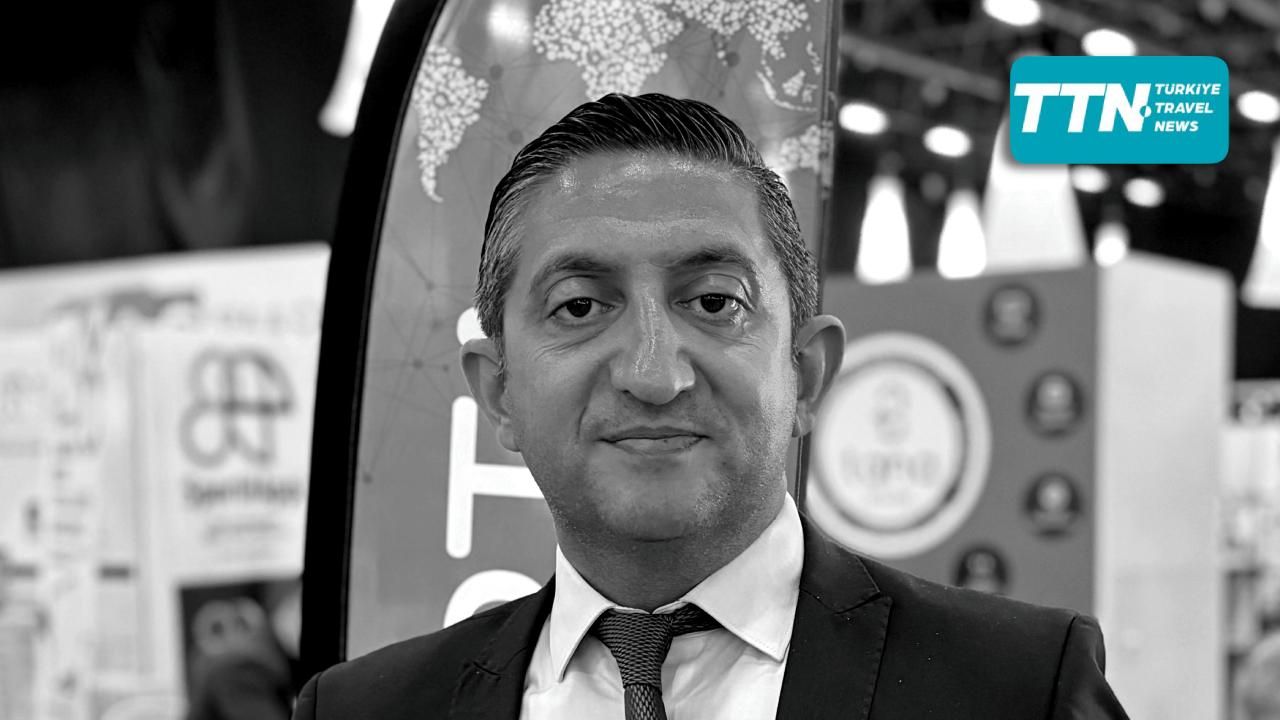
German travellers are increasingly postponing their holiday booking decisions amid rising prices, while Egypt is emerging as a stronger alternative to Türkiye, according to Hakan Sancarbarlaz, co-owner of Reisebüro Sancarbarlaz in Osnabrück, Germany.
Speaking to Turizm Ekonomi News Director Savaş Daş about the 2026 tourism season and expectations for 2027, Sancarbarlaz said early bookings for the new season had begun, but high prices were influencing consumers’ purchasing decisions.
He said demand for summer 2027 holidays was already emerging, although German consumers were closely monitoring prices and waiting for more favourable offers before making reservations.
German Travellers Wait Longer to Book Early Holidays
Sancarbarlaz said the traditional early-booking period in the German market was shifting. Whereas reservations were previously concentrated in October and November, consumers are now increasingly waiting until January and February.
He said initially high prices followed by subsequent reductions were encouraging customers to delay their booking decisions.
“Early bookings are no longer being made as frequently as before. Germans normally booked very early, in October and November. However, they are now waiting for January and February. Due to political crises, people also think it makes sense to book later,” Sancarbarlaz said.
Türkiye Perceived as More Expensive Than Spain and Greece
Sancarbarlaz also addressed Türkiye’s price positioning in the European holiday market, saying German consumers increasingly perceive Türkiye as more expensive than Spain.
Although Turkish hotels offer high service standards and extensive facilities, holiday prices in Türkiye are seen as higher than those in Spain and Greece, he said.
This perception is prompting consumers to question both the price and the range of services included in holiday packages. Particularly in the luxury hotel segment, travellers are reconsidering whether they need the extensive services offered by properties.
More economical all-inclusive alternatives are consequently attracting attention, including alcohol-free packages and versions of the all-inclusive concept with a more limited range of services designed to reduce prices.
However, Sancarbarlaz said consumers were not simply looking for changes in the holiday concept. They wanted lower-priced packages offering fewer services.
Egypt Emerges as an Alternative for German Families
Egypt is increasingly competing with Türkiye for German holidaymakers, particularly in the family holiday segment, according to Sancarbarlaz.
He said Spain and Greece were not affecting Türkiye’s customer base to the same extent as Egypt. The destination’s all-inclusive hotel offering and prices are making it a strong alternative for German travellers.
Hotel investments and service standards in Egypt have also developed, he said, noting that Turkish hotel groups have established a significant presence in the country.
Properties operated by Turkish hotel chains in destinations including Sharm El-Sheikh, Hurghada and Marsa Alam are familiar to Turkish holidaymakers and are also attracting German guests.
Turkish hotel brands operating in Egypt are particularly appealing to German tourists who already know these brands from their holidays in Türkiye, providing them with an alternative destination while retaining familiar hotel experiences.
Turkish Hotels Maintain Strong Service Standards
Despite occasional complaints in the sector, Turkish hotels continue to offer strong service quality and hospitality, Sancarbarlaz said.
He said service standards and friendly hospitality remained among Türkiye’s strengths and continued to meet German travellers’ expectations. However, complaints from consumers were increasingly linked to prices.
According to Sancarbarlaz, high holiday costs are becoming a decisive factor in purchasing decisions, despite the continued quality of hotel services.
Economic Conditions Shorten German Holidays
Economic developments in Germany and across Europe are also affecting holiday spending. Rising energy costs, unemployment and increasing living expenses are putting pressure on consumers’ purchasing power, Sancarbarlaz said.
As a result, more consumers are finding it difficult to afford higher-priced holiday packages.
The trend is also affecting the length of holidays. German travellers who previously booked 14-day packages are increasingly opting for stays of eight, nine or 10 days.
Sancarbarlaz said travellers were trying to maintain holiday quality while reducing the duration of their stays, and that this trend was also evident in bookings for the 2027 season.